
A pest control business plan is a written document that says what you will sell, where, to whom, and how the numbers work, usually in the nine sections the U.S. Small Business Administration lists for a traditional plan. For a pest company, the sections a lender or partner reads hardest are the service mix, the service area, the recurring plan math and the licensing timeline. Below is each section with fill-in lines you can copy into your own document.
This post is about the document itself. If you are still deciding whether to start, read how to start a pest control business first.
Who reads a pest control business plan?
Three readers, and each wants something different:
| Reader | What they look for | Sections they read first |
|---|---|---|
| A bank or lender | Can you repay, and what happens in the slow months? | Financial projections, funding request |
| A partner or investor | Is the market real, and who does what? | Market analysis, organization and management |
| You | What to do this month, and whether you are on track | Services, marketing and sales, operations |
The SBA describes two formats: a traditional plan that can run dozens of pages, and a lean startup plan that is typically one page. Start lean if nobody is lending you money; write the traditional version for a loan. Either way, write the executive summary last.
Section 1: Company description
State the facts a stranger needs to understand the business in one minute: the legal structure, who holds the license, where you operate from and what you are licensed to do.
Business name: ______________________
Legal structure (sole proprietor, LLC, corporation): ____________
Owner(s): ______________________
License holder and license number: ____________
License categories held (or applied for): ____________
Base location: ______________________
Service area (towns or ZIP codes): ______________________
Mission in one sentence: ______________________
Licensing belongs here, not buried in the appendix. Say which licenses and categories you hold today and which you are working toward. Pest control license requirements explains how to find your state's agency and what it asks.
Section 2: Services and service mix
This is the section that makes a pest control plan different from a generic one. "Pest control" covers several businesses with different revenue patterns, and a reader needs to see which you are building.
| Service line | Revenue pattern | Typical license need | Notes for your plan |
|---|---|---|---|
| General household pest | Recurring (monthly, quarterly) | General pest category | The base of most small companies |
| Termite and wood-destroying organisms | One-off treatment plus renewals or inspections | Check your state's categories | Higher ticket, longer obligations |
| Mosquito | Seasonal recurring | Varies by state | Strong in summer, nothing in winter |
| Rodent and exclusion | Mostly one-off | Varies by state | Labor heavy, good margins |
| Wildlife | One-off | Often outside pesticide licensing | Unpredictable schedule |
| Commercial accounts | Recurring, often monthly | Varies by state and site | Contracts, paperwork, service logs |
Copy the table, mark which lines you start in year one, and write one paragraph on why this mix. A plan that leads with recurring general pest and adds termite once licensed tells a lender you understand where steady cash comes from. Your price list belongs in this section too; build it from your own costs with how to price pest control services.
Section 3: Market analysis
Keep this local. Nobody reading your plan needs the size of the national pest control industry; they need to know whether your service area can fill your calendar.
Work through these questions in writing:
- Where exactly will you work? List the towns or ZIP codes, and mark the two or three you will build density in first. Route density is profit in this trade, so a tight first area is a strength, not a limitation.
- What housing and pests are there? Single-family neighborhoods or apartments, older homes or new construction, and which pests drive calls in each season.
- Who already works there? Search the services you plan to sell in your area and list the companies that show up on the map. Note what each one publishes: services, whether they sell plans, how many reviews they have, and what reviewers complain about.
- How many pest control businesses are in your county? The Census Bureau's County Business Patterns series reports the number of establishments with paid employees by industry, county by county. It will not count one-person companies without payroll, so treat it as a floor.
Primary service area: ______________________
Second area (month 6 onward): ______________________
Main local pests by season: ______________________
Competitors (name, services, plans offered, review count, common complaints):
1. ______________________
2. ______________________
3. ______________________
Our gap: ______________________
The "our gap" line is the one people skip. Pick something you can deliver every week, such as same-day quotes or a clear written report after every visit.
Section 4: Marketing and sales
The SBA asks you to describe how you will attract and keep customers and how a sale actually happens. For a pest company that second part is concrete: a call or booking, a quote, the initial service, then (if it goes well) a recurring plan.
How a sale happens:
1. First contact (call, website form, booking link, referral): ____________
2. Who quotes, and how fast: ____________
3. Initial service and what it includes: ____________
4. Offer to convert to a plan (when, by whom, what wording): ____________

Channels, in order of priority:
1. ______________________
2. ______________________
3. ______________________

Monthly target: new one-off jobs ____  new recurring plans ____
Your channels will mostly be local: your Google Business Profile, referrals, neighbors of existing customers, realtors and property managers. How to get pest control customers covers each one, and how to get pest control reviews covers the reviews that decide who gets called from the map, including the rules on asking for them.
Add a line on how you will keep recurring customers; how to reduce cancellations on recurring accounts has the habits.
Section 5: Operations
Operations is where you show you can deliver what you just promised to sell.
- Routes: which days serve which areas. A day per area beats driving the whole county every day. See how to build a recurring pest control route.
- Records: which records you keep and for how long. The federal floor is two years under 40 CFR Part 171.107, and many states require longer. Name your state's rule, and confirm it with your state agency.
- Chemical storage and handling: where products are stored, who can access them, and how labels and safety data sheets are kept.
- Software: how you schedule, record treatments and invoice. Whatever you choose, it should produce the application record as part of finishing the job.
- Seasonality: what the quiet months look like and what you will sell in them. How to survive the pest control slow season is worth reading before you write this part.
Service days by area: Mon ______ Tue ______ Wed ______ Thu ______ Fri ______
Record system and retention period (state rule: ______ years): ____________
Chemical storage location and access: ____________
Vehicle(s): ____________
Slow months: ______  Plan for them: ____________
Section 6: Organization and management
Say who does what today, and what changes as you grow. In a one-truck company the owner does everything, and the plan should say so plainly.
Owner role(s): ______________________
Outside help (bookkeeper, accountant, insurance agent, lawyer): ____________
Hiring trigger (the point at which you hire technician #1): ____________
How technicians will be paid (hourly, commission, mix): ____________
Licensing plan for new hires: ____________
The hiring trigger should be a number you can measure, such as a count of recurring accounts or booked hours per week, not "when it gets busy." How to hire your first pest control technician and pest control technician pay help you set both.
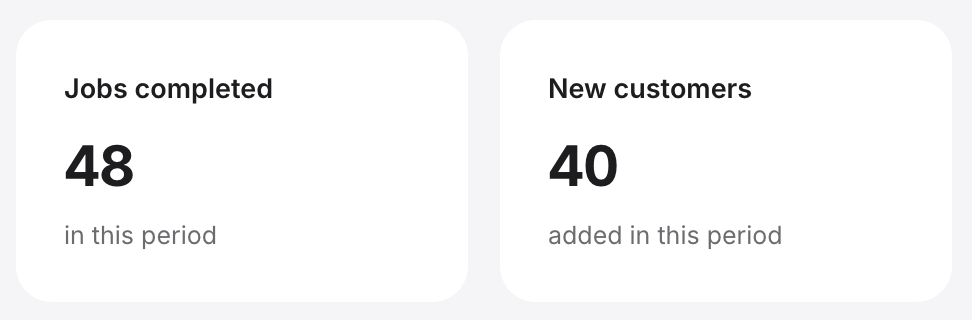 Two of the numbers in PestShift Analytics to check against your plan. (demo data)